
Packing guide
Pack it so it arrives the way it left.
Damage happens in transit, not at the destination. Good packing absorbs shocks, stops movement and survives stacking. Here is how to do it with materials you can easily find.
- Core rule
- 5 cm cushioning
- Box type
- Double-wall for heavy
- Seal
- H-pattern taping
Materials
What you need
Outer box
Use a new or undamaged corrugated box. Choose double-wall for heavy or valuable items.
Cushioning
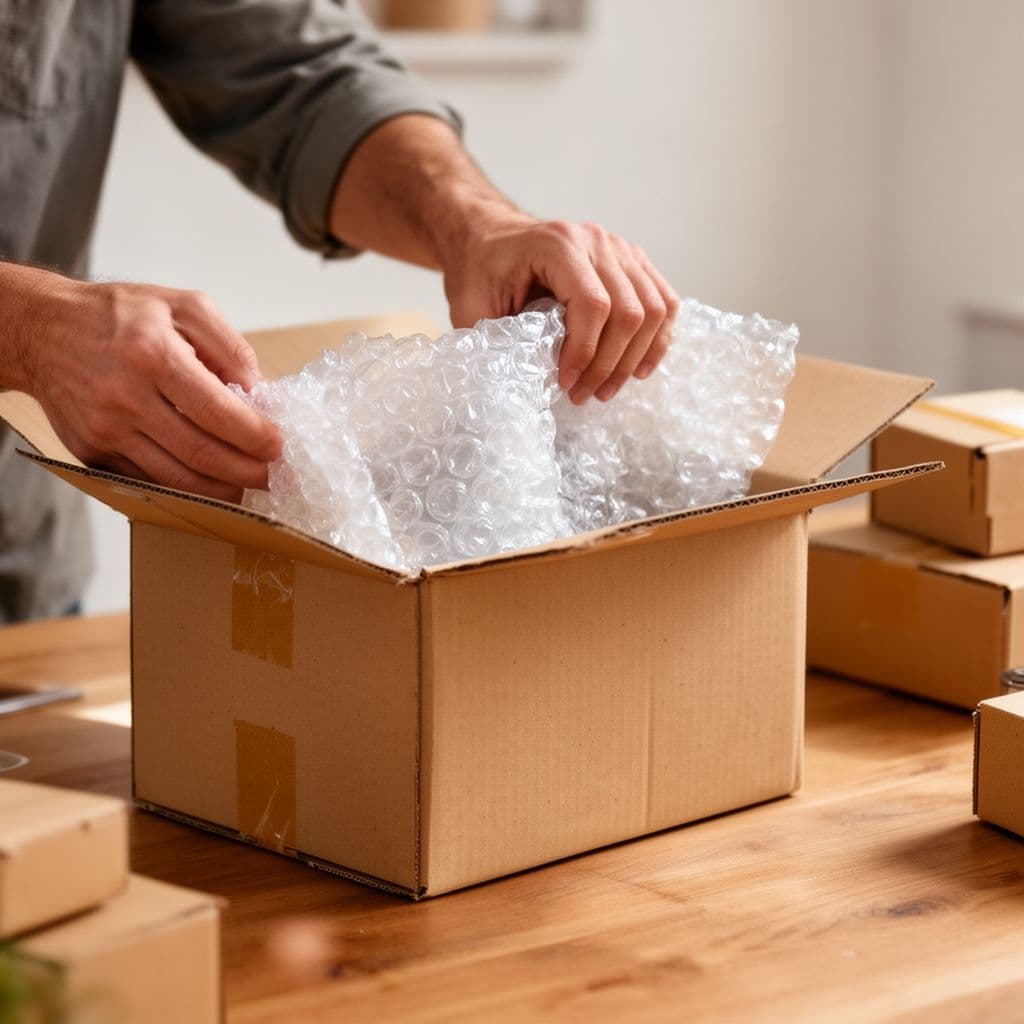
- Bubble wrap for fragile surfaces
- Packing paper or foam for void fill
- Corner protectors for frames and screens
Closure
Strong packing tape, at least 48 mm wide. Avoid string, masking tape or cellophane tape.
Method
Pack in five moves
1. Wrap each item separately
Items that touch each other can break each other. Wrap individually.
2. Cushion the base
Add at least 5 cm of padding to the bottom of the box before placing items.
3. Place heavy items low
Heavy items go at the bottom, light items on top, with no empty space around them.
4. Fill every gap
Shake the box gently. If anything moves, add more filler.
5. Seal and label
Tape every seam in an H-pattern. Place one clear label on top and a copy inside the box.

Special cases
Fragile, liquid and electronic
Fragile goods
Double-box: place the wrapped item in a small box, then inside a larger box with 5 cm of cushioning on all sides.
Liquids
Use leak-proof containers, seal the cap with tape and place inside a sealed plastic bag with absorbent material.
Electronics
Use anti-static bags where possible and original packaging if you still have it. Remove batteries if allowed for your route.
Questions
Good to know.
Can I reuse an old box?
Only if it is rigid and undamaged. Remove old labels and barcodes so scanners read the new label.
Do you offer packing help?
Contact our agency. Where available, we can advise on packaging for specific goods.